
The Basic Definition
In simple terms, an Occupancy Certificate (OC) is a legal document issued by the local municipal authority (like the BMC in Mumbai or DDA in Delhi) or the building planning authority. It certifies that a building has been constructed according to the approved plans and is compliant with all local laws and safety standards.
Think of it as a “pass certificate” for a building. Just as you wouldn’t drive a car that hasn’t passed its safety inspection, you shouldn’t live in a building that hasn’t received its OC.
What Does it Verify?
When a developer gets an OC, the authorities are essentially verifying three main things:
- Adherence to Plan: The building was built exactly where and how the blueprints said it would be (no illegal extra floors or encroachments).
- Habitability: The building is safe for humans to live in.
- Safety Compliance: Fire safety norms, structural stability, and sanitation requirements have been met.
Without this document, a building is technically categorized as an “illegal structure” in the eyes of the law, even if you have paid for it in full.
The “Holy Trinity” of Documents: OC vs. CC vs. Possession Letter
New homebuyers often confuse these three documents. It is crucial to understand the difference so you don’t get taken for a ride.

1. Completion Certificate (CC)
A Completion Certificate is the first step. It is issued by the municipal authorities after the construction is finished. It confirms that the builder has not violated any building by-laws or master plans. However, a CC alone does not grant the right to live in the building; it just says the building is finished.
2. Possession Letter

This is a document issued by the builder to the buyer. It states that the builder has handed over the property to you. While this feels like the moment of ownership, legally, it is not enough to establish full ownership or legal residency without the OC.
3. Occupancy Certificate (OC)
This is the final seal of approval. While the CC says “the building is done,” the OC says “the building is safe and ready for families to move in.”
The Golden Rule: Never accept the keys based only on a Possession Letter. You need the OC to make your ownership watertight
Why is the OC So Critical? (The “So What?” Factor)
You might be thinking, “If I have the keys and the registry is done, why does a piece of paper matter?” Here is why ignoring the OC is a massive financial and legal risk.
1. Legal Status of Your Home

Without an OC, your building can be declared unauthorized. In extreme cases, if the builder violated FSI (Floor Space Index) norms or built on illegal land, the municipal corporation has the right to demolish the property. You could be evicted from your own home with very little legal recourse.
2. Utility Connections
This is the most immediate practical problem. By law, municipal corporations are not supposed to provide water connections or sanitary sewage connections to buildings without an OC.
- The workaround: Many residents in non-OC buildings rely on tanker water or pay commercial rates for electricity and water, which are significantly higher than residential rates. Over 10-15 years, this extra cost runs into lakhs.
3. Resale Value
Smart investors and second-time homebuyers know to ask for the OC. If you try to sell your property later, and you don’t have the OC, you will likely have to sell at a steep discount. A property with a clear title and OC always commands a market premium
4. Home Loans

Banks are becoming stricter. Most nationalized banks and reputable financial institutions will not approve a home loan for a resale property if the building does not have an OC. This drastically reduces your pool of potential buyers when you want to sell.
What Happens If You Don’t Have an OC?
Living without an OC is like driving without insurance. You might be fine for a while, but if something goes wrong, the consequences are severe.
The Risk of Regularization Penalties
Sometimes, state governments introduce “amnesty schemes” to regularize buildings that don’t have OCs. However, this often involves paying heavy penalties. If the builder has vanished (which happens frequently), the burden of these penalties falls on the residents/society members.
Partial OCs
Be wary of “Partial OCs.” Sometimes, in large township projects, builders get a partial OC for Tower A while Tower B is still under construction. While this allows Tower A residents to move in, you must ensure the builder is committed to getting the Final OC once the entire project is done. A partial OC is valid, but it is temporary.
The Process: How is an OC Obtained?
Ideally, the developer handles this. It is the developer’s legal obligation to obtain the OC before inviting buyers to take possession.
The Step-by-Step Flow:
- Submission: Once the building is complete, the developer submits a formal request to the local municipal corporation.
- Documents: They submit the project completion certificate, fire NOC (No Objection Certificate), and photos of the completed building.
- Inspection: A technical officer from the municipality inspects the site to ensure it matches the sanctioned plan.
- Issuance: If everything is compliant, the OC is issued within 30 days.
Documents Required for OC Application
- Project commencement certificate.
- Completion Certificate (CC).
- No Objection Certificates (NOCs) for fire and pollution.
- Copy of the sanctioned building plan.
- Photographs of the completed structure (including rain harvesting pits, solar panels, etc., if mandated).
What Can You Do If the Builder Refuses to Give the OC?
This is a common nightmare scenario. The builder hands over the keys, takes the final payment, and then stops responding to calls about the OC because they know they violated a building code.
1. File a Complaint under RERA
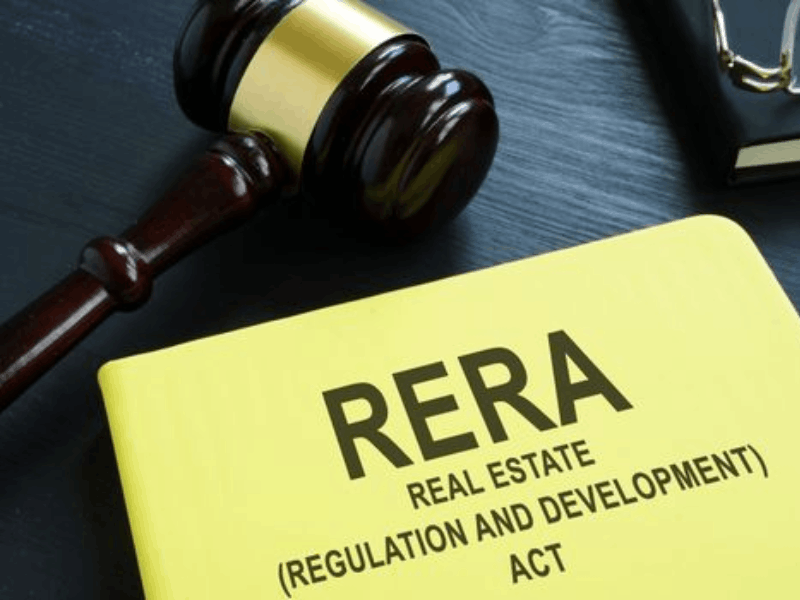
The Real Estate (Regulation and Development) Act, 2016 (RERA) is a game-changer here. Under Section 11(4)(b) of the RERA Act, it is the specific responsibility of the promoter to obtain the Occupancy Certificate and make it available to the allottees.
- You can file a complaint with your state’s RERA authority. RERA can fine the builder and force them to regularize the building.
2. Consumer Forum

You can approach the Consumer Disputes Redressal Commission. Courts have ruled in the past that not providing an OC is a “deficiency of service,” and builders have been ordered to pay compensation to buyers for the delay.
3. RTI (Right to Information)
If you are unsure of the status, you can file an RTI application with the local municipality to check if the builder has even applied for the OC or if it was rejected due to violations.
Conclusion: A Checklist for Homebuyers
In the excitement of housewarming parties and interior decoration, do not let the boring paperwork slide.
Before you pay the final installment to your builder, ask these three questions:
- Has the Completion Certificate (CC) been issued?
- Have you applied for the Occupancy Certificate (OC)?
- Can you show me the receipt of the application or the OC itself?
If you are buying a resale property, the OC is non-negotiable. If the seller says, “Oh, the society is old, nobody has an OC here,” treat that as a red flag. Consult a property lawyer to understand the risks.
The OC is not just a piece of paper; it is your peace of mind. It confirms that your home is safe, legal, and truly yours.
Key Takeaways
- OC = Legality: It proves the building is safe and legal to live in.
- Utilities: Without it, you may pay double for water and electricity.
- Resale: Selling a home without an OC is difficult and less profitable.
- RERA is your friend: If a builder delays the OC, use RERA laws to fight back.

Regional Note: The “BUC” in Gujarat
Real estate terms can vary slightly by state. In Gujarat, the OC is known as the BUC (Building Use Certificate). Whether your builder calls it an OC or a BUC, the document’s purpose and legal importance are identical. Ensure you ask for the BUC specifically if you are buying property in cities like Surat, Ahmedabad, or Vadodara.