
If you have ever tried to buy a home, start a construction project, or even just eavesdrop on a conversation between real estate developers, you have probably heard the term FSI thrown around. It’s usually whispered with a mix of excitement and anxiety. In this blog you will learn Floor Space Index (FSI), its meaning, calculation method, and how it affects building size, construction limits, and real estate projects.
“What’s the FSI on that plot?” “Did the government increase the FSI limits?”
For the uninitiated, real estate terminology can feel like learning a new language. You have RERA, carpet area, built-up area, super built-up area, and then the big boss: FSI (Floor Space Index).
But here is the truth: FSI isn’t just a boring technical term for architects. It is arguably the single most important number that determines the value of a piece of land and the lifestyle of the people who will eventually live there. It decides whether a neighbourhood feels like a spacious suburb or a cramped concrete jungle.
In this guide, we are going to strip away the jargon and explain exactly what FSI is, how it’s calculated, and most importantly why you should care about it.
Why Does FSI Even Exist? The Logic Behind the Number

At its simplest level, FSI stands for Floor Space Index. In some parts of the world (and even in some cities within India), it is referred to as FAR (Floor Area Ratio). While the terminology changes, the concept remains exactly the same.
Think of FSI as a “limit card” set by the government. It tells you how much you are allowed to build on a specific piece of land.
Imagine you own a piece of land. You can’t just build a 100-story skyscraper because you feel like it. The city infrastructure roads, water supply, sewage can only handle so many people in one spot. FSI is the tool the government uses to control that density. It represents the ratio of the total built-up area of a building to the total size of the plot it stands on.
The Simple Analogy
Think of a plot of land like a dinner plate. FSI is the amount of food you are allowed to pile onto that plate.
- Low FSI: You can only put a little bit of food (a small house or a low-rise building).
- High FSI: You can pile the food high (a tall skyscraper or a massive commercial complex).
If the government didn’t enforce FSI, developers would build endlessly upwards to maximize profits, leading to overcrowding and a collapse of local infrastructure.
The Magic Formula

FSI = Total Built-Up Area / Total Area of the Plot
Let’s Look at a Real-Life Example
Let’s say you own a plot of land that is 1,000 square feet.
- Scenario A (FSI is 1.0): You are allowed to build a total of 1,000 square feet on that land. You could build a 1-story house covering the whole plot, or a 2-story house covering half the plot. But you cannot exceed 1,000 sq. ft. of floor space.
- Scenario B (FSI is 2.0): Now things get interesting. An FSI of 2.0 means you can build 2,000 square feet on that same 1,000 sq. ft. plot. This allows you to go vertical perhaps a 4-story building where each floor is 500 sq. ft.
Why Does FSI Even Exist? The Logic Behind the Number
You might be wondering, “why does the government care if I build two floors or ten floors on my own land?”
It comes down to Quality of Life. FSI is the city planner’s volume knob. It controls the “loudness” or density of a city zone.
Controlling Population Density
Every area has a “carrying capacity.” A 30-foot-wide road can only handle so many cars. A sewage pipe has a maximum flow limit. If an area with narrow lanes suddenly gets five skyscrapers, the traffic will gridlock, and the drains will overflow.
- City Centers: Usually have higher FSI because they have wider roads, better public transport (like Metros), and stronger infrastructure.
- Suburbs/Outskirts: Often have lower FSI to maintain a quieter, less dense atmosphere.
The Skyline and Open Spaces
FSI also dictates the look and feel of a city. High FSI leads to vertical growth the Manhattan or Mumbai skyline look. Low FSI leads to horizontal growth the sprawling villas of Los Angeles or simpler tier-2 city suburbs. By manipulating FSI, authorities can force developers to leave more open space on the ground for gardens, parking, and fire safety lanes.
Why Does FSI Even Exist? The Logic Behind the Number
If you look at a city map, the FSI isn’t the same everywhere. It changes from street to street. Why? Because not all land is created equal. Several factors decide how much FSI a specific plot gets.
1. Width of the Road
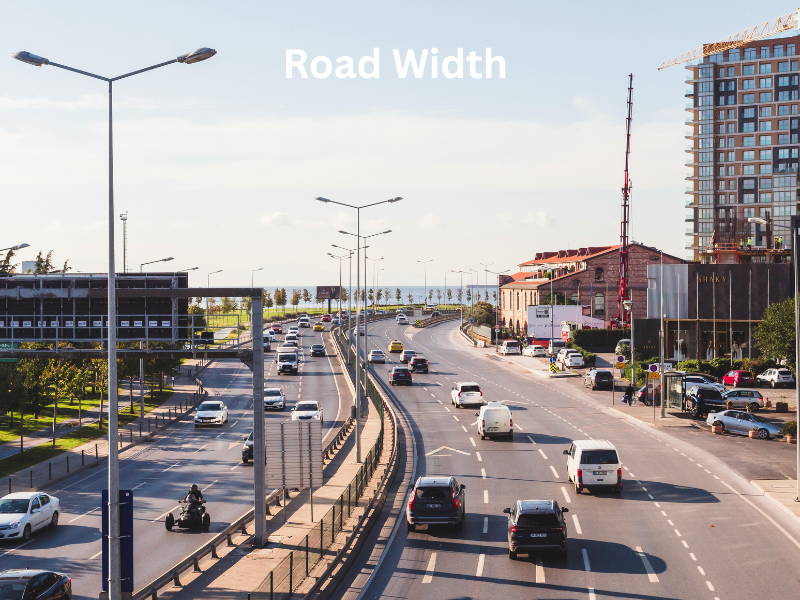
This is the big one. In most municipal corporations, the FSI is directly linked to the width of the road adjacent to the plot.
- Ideally: Wider road = Higher FSI.
- Why? A wide road can handle the traffic generated by a tall commercial or residential building. A narrow ‘galli’ cannot. If you live next to a massive highway, developers can usually build much taller structures there.
2. Zone Type (Residential vs. Commercial)
Commercial projects usually get a higher FSI than residential ones. Business districts are designed to pack many people into offices during the day, so cities allow for denser construction there. Industrial zones might have different FSI rules entirely, focusing on ground coverage rather than height.
3. City Development Tier
A metro city like Mumbai or Delhi will naturally have higher allowable FSI limits compared to a smaller town or a hill station. In hill stations, FSI is kept very low to protect the environment and prevent landslides.

The Impact of “Transit-Oriented Development” (TOD)
Recently, many governments have introduced TOD policies. This means if a plot is near a Metro station or a major bus terminal, the government gives it a massive FSI boost. The logic is that people living there will use public transport instead of cars, so it’s okay to pack more people into that area without clogging the roads.
Why Does FSI Even Exist? The Logic Behind the Number
Just when you thought you understood FSI, the real estate industry throws a curveball. The “base” FSI is rarely the final number. There are ways to increase it, and this is where developers make their money.
Premium FSI
Sometimes, the government allows you to exceed the base FSI limit if you pay a fee. This is called Premium FSI. For example, if the base FSI is 1.5, the government might let you build up to an FSI of 2.0 if you pay a “premium” charge to the municipal corporation. This fee is often used by the city to fund infrastructure projects.
Fungible FSI
This is a bit more technical. “Fungible” essentially means interchangeable. In some cities, developers can purchase extra FSI specifically for “standard” areas like balconies, lift lobbies, and flower beds. In the past, developers would build massive balconies and not count them in the FSI. Now, rules often say, “You can build that balcony, but you have to buy the FSI for it.”
Why Should YOU Care? (The Buyer’s Perspective)
If you are just buying a 2BHK apartment, why does the FSI of the building matter? You aren’t the one building it, right?
Actually, FSI directly impacts your wallet and your living experience.
Impact on Apartment Pricing
- High FSI Area: Since the developer can build more apartments on the same land, the per-unit land cost goes down. Theoretically, this could mean cheaper homes. However, high FSI areas are usually prime locations (city centers), so the base land rate is high to begin with.
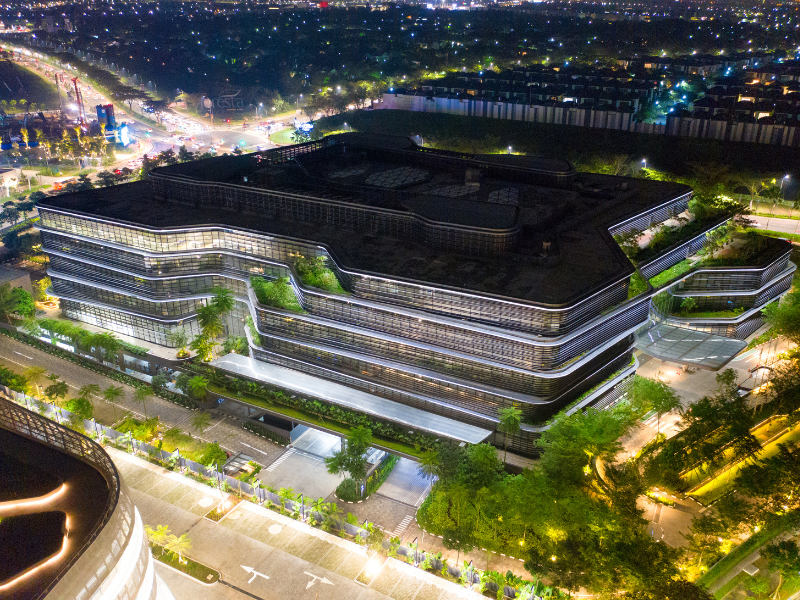
- Low FSI Area: The developer has to recover the land cost from fewer apartments. This often makes individual units more expensive, but they come with more “exclusive” rights to the land.
The “Crowd Factor”
This is the most practical aspect.
- High FSI: Means more neighbours. You will have more people sharing the elevator, the swimming pool, the gym, and the park. It feels more urban and energetic, but also more crowded.
- Low FSI: Means fewer neighbours. It offers more privacy and a lesser load on shared amenities. If you value peace and quiet, look for areas with lower FSI caps.
Open Space and Greenery
A project utilizing maximum FSI often covers more of the sky. Unless the developer has planned smartly (by building very tall and thin towers), a high FSI project might feel like a concrete block with very little sunlight reaching the ground floor.
A Safety Note for Buyers
Always check if the building you are buying into has adhered to the FSI norms. Illegal floors are a nightmare. If a developer builds 5 floors when the FSI only allowed for 3, the government can (and often does) deem the top two floors illegal. As a buyer, you could lose your home. Always ask for the “Occupancy Certificate” (OC), which proves the building followed FSI rules.
Conclusion: FSI is the Invisible Architect

FSI might seem like just a boring number on a government document, but it is the invisible hand shaping our cities. It decides how tall our buildings grow, how wide our roads need to be, and how many neighbours we bump into in the morning.
For a developer, FSI is a tool for profit a way to maximize the potential of a land parcel. For a city planner, FSI is a control mechanism a way to ensure the city doesn’t collapse under its own weight. And for you, the homebuyer, FSI is a quality indicator. It tells you about the density, the legality, and the future value of your home.
Next time you look at a property brochure, don’t just look at the carpet area or the fancy swimming pool photos. Ask about the FSI. Ask about the land. Understanding the bones of the building will help you make a decision that is solid as a rock.