
Buying a home is more than just a financial transaction; it is an emotional milestone. It’s the culmination of years of hard work, saving, and dreaming. But for decades, the Indian real estate market felt less like a dream and more like a gamble. Homebuyers were often left navigating a maze of delayed projects, hidden costs, and broken promises.
Enter the Real Estate (Regulation and Development) Act, 2016, popularly known as RERA.
If you are looking to buy an apartment, a villa, or even a commercial office space in India today, understanding RERA is not optional it is your superpower. In this detailed guide, we are going to strip away the complex legal jargon and explain exactly what RERA is, how it protects your hard-earned money, and why it has restored trust in the Indian property sector.
What Exactly is the RERA Act?
At its simplest, RERA is the watchdog of the Indian real estate industry. Before its introduction, the sector was largely unregulated. It was a “seller’s market,” meaning the developers held all the cards, and the buyers had very little say.
The RERA Act was passed by the Indian Parliament to act as a referee between homebuyers and developers. The primary mission of RERA Act is to bring transparency, accountability, and efficiency to the real estate sector.
Think of RERA as a protective shield. It ensures that the promises made to you in glossy brochures are actually delivered in concrete and cement. The Act mandates that every state in India must establish its own Real Estate Regulatory Authority (like MahaRERA in Maharashtra or GujRERA in Gujarat) to oversee projects and resolve disputes quickly.
Why Was RERA Needed? (The “Wild West” Era)

To truly appreciate the power of RERA, we have to look at the chaos that existed before it came into full force on May 1, 2017.
The Trap of “Super Built-Up” Area
Before RERA, buying a 1,500 sq. ft. apartment often meant you only got 1,000 sq. ft. of actual living space. Builders would charge you for the “Super Built-Up Area,” which included common spaces like lobbies, staircases, elevator shafts, and sometimes even the clubhouse! You were paying for space you couldn’t even use inside your home.
The Nightmare of Endless Delays
This was the biggest pain point. Developers would launch a project, collect money from buyers, and then divert those funds to buy land for a new project instead of finishing the current one. This “fund diversion” left thousands of homebuyers paying both rent and EMI for years while their dream homes remained stuck as skeletons of concrete.
One-Sided Contracts
Pre-RERA agreements were notoriously biased. If a buyer delayed a payment, they were charged 18% interest. But if the builder delayed possession, they often paid a measly penalty of Rs. 5 per sq. ft. RERA was introduced to level this playing field.
7 Game-Changing Benefits of RERA for Homebuyers
This is the most critical section for you as a buyer. RERA isn’t just a set of rules for builders; it is a Bill of Rights for you. Here is how it directly impacts your purchase:
1. Standardization of “Carpet Area”
RERA killed the ambiguity of size. It made it illegal to sell property based on Super Built-Up Area. Builders must now quote prices based strictly on Carpet Area.
According to the Act, carpet area is the net usable floor area of an apartment. This excludes external walls but includes internal partition walls.
- The Benefit: You know exactly what you are paying for. It allows you to compare two different projects apples-to-apples. A 1,000 sq. ft. RERA carpet area in Project A is the same size as 1,000 sq. ft. in Project B.
2. The 70% Escrow Account Rule
This is the financial backbone of the Act. RERA mandates that developers must deposit 70% of the money collected from buyers into a separate, dedicated Escrow Bank Account.
- The Benefit: The builder cannot take your money and use it to buy land for another project. This money can only be withdrawn to cover the cost of construction and land for your specific project. This significantly reduces the risk of project delays due to lack of funds.
3. Strict Penalties for Delayed Possession
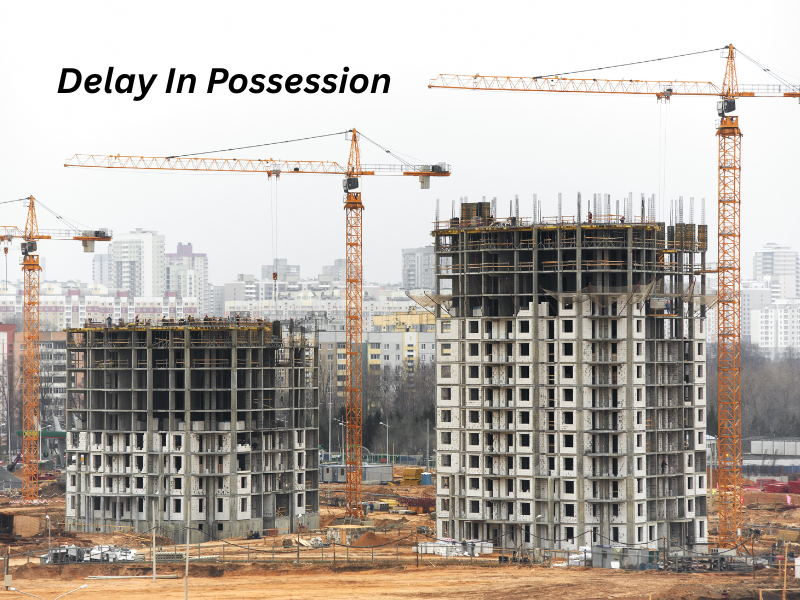
Time is money, and RERA recognizes that. If a builder fails to complete the project by the date mentioned in the agreement:
- They must pay you interest for every month of delay (usually SBI’s MCLR rate + 2%).
- Alternatively, if you choose to withdraw from the project, they must refund your entire amount along with interest.
- The Benefit: Builders are now extremely cautious about the completion dates they promise.
4. The 5-Year Defect Liability Period
Your relationship with the builder doesn’t end when you get the keys. RERA introduced a mandatory 5-year warranty on your home.
- The Benefit: If you find any structural defects or poor quality in workmanship within five years of possession, the builder is legally obligated to fix it free of charge within 30 days.
5. Cap on Advance Payment (Booking Amount)
Earlier, builders would demand 20% or even 30% of the cost before signing any legal papers.
- The Benefit: Under RERA, a builder cannot accept more than 10% of the property cost as an advance or application fee without first entering into a registered Agreement for Sale. This protects your liquidity.
6. Right to Information
Transparency is key. Builders must upload all project details on the RERA website, including approved plans, layout plans, and the timeline for completion.
- The Benefit: You don’t have to rely on the word of a sales agent. You can verify the approvals yourself online.
7. Title Representation
The builder must provide a guarantee that they have a clear, legal title to the land. If any defect in the title is discovered later, the builder is liable to compensate the homebuyer, and there is no time limit for this liability.
Which Projects Come Under RERA?
Not every single construction falls under RERA, but the vast majority do. A project must be registered under RERA if:
- The land area to be developed exceeds 500 square meters.
- OR the number of apartments proposed to be developed exceeds 8 units.
- This applies to both Residential and Commercial projects.

Note: Project that had received a Completion Certification (CC) before the Act was implemented are usually exempt.
How to Check the RERA Status of a Project

Before you write a cheque, perform this 5-minute check. It could save you lakhs.
- Visit the State RERA Website: Go to the official website of the state where the property is located (e.g., maharera.mahaonline.gov.in for Maharashtra).
- Navigate to “Search Projects”: Look for a tab often labeled “Registered Projects” or “Search.”
- Enter Details: Type the name of the project or the builder.
- Review the Certificate:
- Check the “Proposed Completion Date.” (Is it the same date the sales team promised you?)
- Check for Litigation. (Are there legal cases against the land?)
- Check quarterly updates to see if construction is progressing as per plan.
Pro Tip: If a project is advertised as “RERA Applied” or “RERA In Process,” do not book it. Wait until they have a valid RERA Registration Number.
Grievance Redressal: What If Things Go Wrong?
Even with strict laws, disputes can happen. The beauty of RERA is that it provides a fast-track mechanism to solve them, so you don’t have to spend decades in civil courts.
How to File a Complaint:
- Go Online: Visit your state’s RERA portal.
- File Complaint: There is usually a “Complaints” tab. You will need to create a user ID.
- Fill Details: Enter your details, the builder’s details, and the nature of your violation (delay, quality issue, etc.).
- Pay Fee: A nominal fee (usually between Rs. 1,000 to Rs. 5,000) applies.
- Hearing: The Authority will summon both parties. RERA courts are designed to be faster and less formal than civil courts.
- Adjudication: If the builder is found guilty, they will be ordered to pay compensation or refund your money.

If you are unsatisfied with the RERA order, you can appeal to the Real Estate Appellate Tribunal (REAT) within 60 days.
The Impact of RERA on Builders (It’s Not All Bad!)
While RERA is consumer-centric, it has also matured the industry.
- Consolidation: The “fly-by-night” operators who scammed people have vanished. Only serious, professional developers remain.
- Trust: Builders who are RERA compliant are finding it easier to sell homes because buyers trust them.
- Funding: Banks are more willing to lend money to RERA-registered projects because the risk is lower.
Conclusion
The RERA Act has fundamentally shifted the power dynamic in Indian real estate. It has moved the industry from an era of opacity to an era of transparency.

However, the law is only effective if you use it. As a smart homebuyer in 2025, your due diligence is essential. Always ask for the RERA number, check the carpet area, and ensure every promise made to you is documented in the Agreement for Sale.
Your home is your sanctuary. RERA ensures that the journey to getting there is safe, secure, and stress-free.